




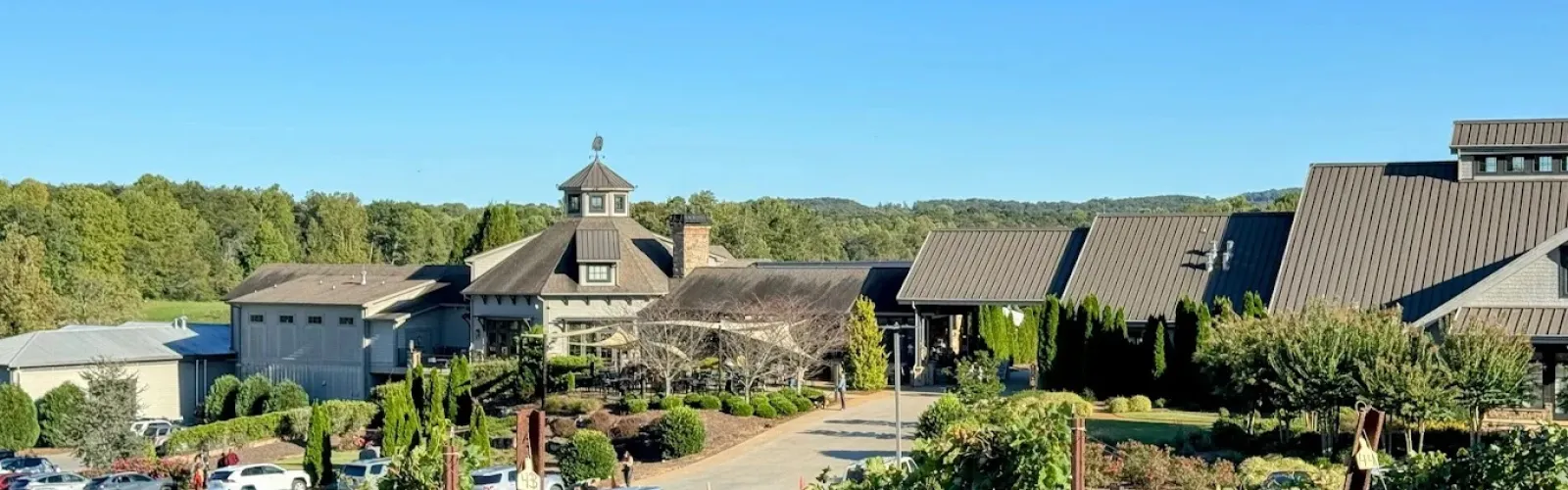
Every bottle of wine begins long before it reaches your glass. At Yonah Mountain Vineyards, winemaking is a careful balance of nature, timing, and precision. From the vineyard beneath Yonah Mountain to the final cork, each step plays a role in shaping the character of the wine.
Understanding how wine is made not only deepens your appreciation, it also transforms a simple tasting into something far more meaningful.
Step 1: Growing the Grapes
The process begins in the vineyard, where the quality of the wine is largely determined.
Throughout the spring and summer, grapevines go through a series of stages, from bud break to flowering to fruit set. As the season progresses, clusters develop and begin to ripen under the North Georgia sun.
At Yonah Mountain Vineyards, elevation and soil composition play a critical role. Warm days help ripen the grapes, while cooler nights preserve acidity. This balance is essential for producing wines with structure and freshness.
The vineyard team carefully manages the canopy, monitors vine health, and controls yields to ensure that each grape reaches optimal quality.
Step 2: Harvest
Harvest is one of the most important and exciting moments in the winemaking process.
Rather than picking on a fixed date, grapes are harvested based on ripeness. Winemakers closely track sugar levels, acidity, and flavor development to determine the perfect time.
This window can be narrow. Picking too early can result in underripe flavors, while waiting too long can lead to overly ripe fruit.
During harvest, grapes are often picked in the early morning hours when temperatures are cooler. This helps preserve freshness and prevents premature fermentation.
Once picked, the grapes are quickly transported to the winery to begin the next phase.
Step 3: Sorting and Crushing
Before fermentation begins, grapes are sorted to ensure only the highest quality fruit is used.
Leaves, stems, and any imperfect berries are removed. This step is critical for maintaining consistency and purity in the final wine.
After sorting, the grapes are gently crushed. For white wines, the juice is typically separated from the skins right away. For red wines, the skins remain with the juice, which is what gives red wine its color and tannin structure.
Step 4: Fermentation
Fermentation is where grapes truly become wine.
Yeast is introduced to the grape juice, either naturally occurring or carefully selected by the winemaker. The yeast consumes the sugars in the juice and converts them into alcohol, releasing carbon dioxide and heat in the process.
For red wines, fermentation often takes place with the grape skins, allowing color, flavor, and tannins to develop. The winemaking team may gently mix or "pump over" the fermenting wine to extract these elements.
For white wines, fermentation typically occurs without skins, resulting in a cleaner, more delicate profile.
Temperature control is essential during this stage. Too much heat can affect flavors, while cooler fermentations can preserve aromatics, especially in white wines like Viognier.
Step 5: Pressing
Once fermentation is complete, the wine is separated from the solids.
For red wines, the remaining skins and solids are pressed to extract additional wine. For whites, pressing usually occurs earlier in the process.
This step helps define the texture and structure of the wine.
Step 6: Aging
After fermentation, the wine begins to develop its final character through aging.
Some wines are aged in stainless steel tanks to preserve freshness and fruit-forward flavors. Others are aged in oak barrels, which can add notes of vanilla, spice, and toast while softening the wine's structure.
At Yonah Mountain Vineyards, barrel aging is an important part of crafting many of the winery's red wines. The length of time in barrel can vary depending on the style, ranging from several months to multiple years.
During this period, winemakers regularly taste and evaluate the wine, making decisions that shape its final profile.
Step 7: Blending
Not all wines come from a single batch.
Blending allows winemakers to combine different grape lots or varietals to create balance and complexity. One lot may bring structure, another aroma, another depth.
This stage is both technical and creative, requiring experience and a clear vision for the finished wine.
Step 8: Bottling
Once the wine has reached its desired expression, it is prepared for bottling.
The wine is clarified, stabilized, and carefully bottled to preserve its quality. From there, it may continue to age in the bottle before being released.
Bottling marks the final step in a long journey that began in the vineyard months or even years earlier.
From Vineyard to Glass
Every step in the process, from growing the grapes to aging and bottling, contributes to what you experience in the glass.
When you visit Yonah Mountain Vineyards, you are not just tasting wine; you are experiencing the result of an entire season's work, shaped by the land, the climate, and the decisions made along the way.
Understanding how wine is made adds a new layer to every sip. It connects you to the vineyard, the process, and the people behind the wine.
